Travel
Why Train Travel in Canada Is Worth the Extra Time
By Sophie Clarke · 2026-04-18 · 7 min read
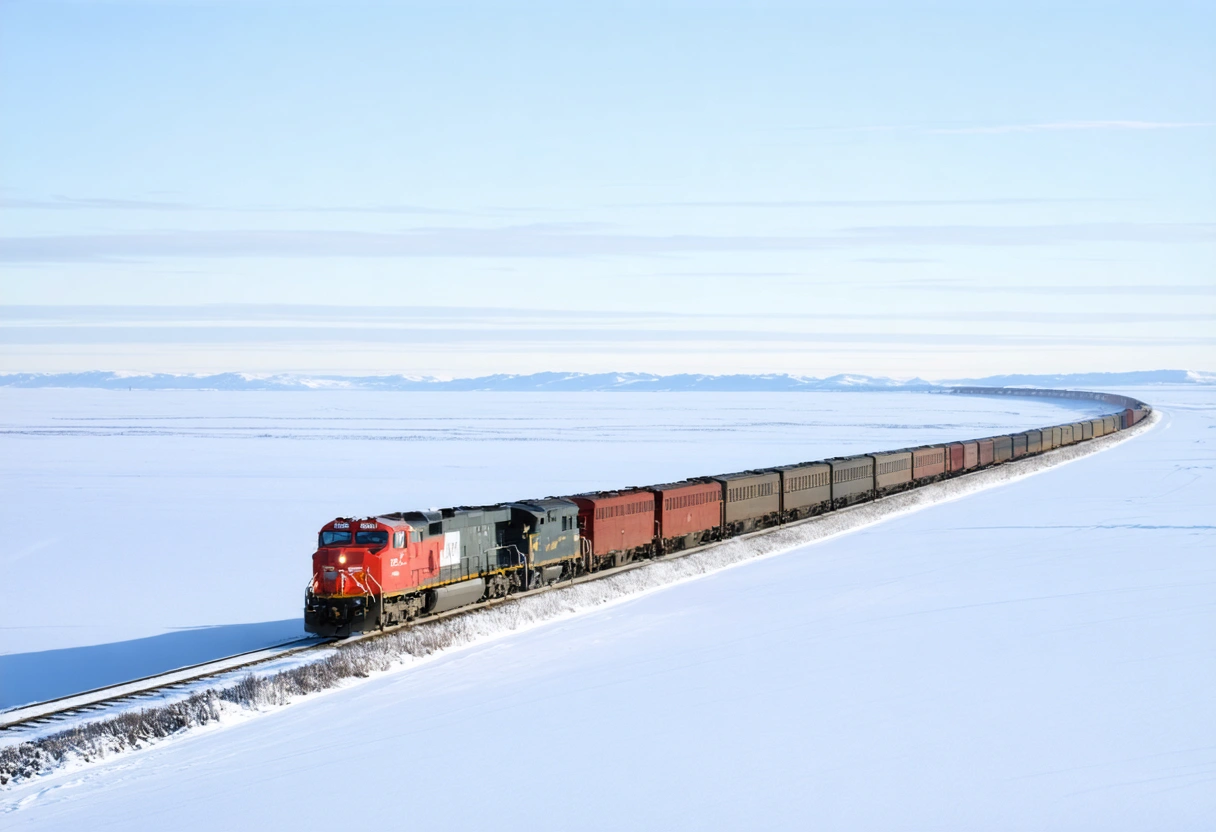
The train leaves Toronto just before ten in the evening. By the time most passengers have found their bearings — located the dining car, spoken to the person in the adjoining seat who is going all the way to Vancouver, settled into the rhythm of movement — the lights of the city have been replaced by the darkness of the Ontario countryside, punctuated occasionally by the glow of a small town.
When morning arrives, the landscape has changed completely. The flat Ontario farmland has given way to the Canadian Shield — ancient rock, tens of thousands of lakes, forest that extends for hundreds of kilometres in every direction without a road in sight.
This is what trains do that aircraft cannot: they give you the actual space in between.
The Canadian
VIA Rail's flagship service is The Canadian, which runs between Toronto and Vancouver on a journey of approximately four days, covering just over 4,400 kilometres. The route is not the fastest way between those two cities. It is not the cheapest. What it offers is the experience of crossing the country — the Shield, the Prairies, the Rockies, the Fraser Canyon — at a pace that allows the scale to register.
The Canadian operates with sleeper car accommodation (private rooms or berths, with meals included) and economy class (seats that recline, access to the dining car). The sleeper accommodation is expensive in absolute terms; the economy class is more accessible and shares the same landscape.
The dome car — a glass-roofed observation car — provides an unobstructed 360-degree view of passing terrain. In the Rockies, passengers tend to congregate there regardless of the time, watching the mountains resolve out of the distance and pass.
Regional Routes
VIA Rail's network extends beyond the transcontinental route. For shorter journeys, several regional services are worth considering:
The Ocean runs between Montreal and Halifax three times a week, covering the sweep of Quebec's south shore, the Bay of Fundy, and the green landscape of New Brunswick and Nova Scotia. The overnight journey takes approximately 21 hours in each direction.
The Quebec City–Windsor Corridor is VIA's most frequent and most commercially viable service, connecting the major cities of Quebec and Ontario. Travel times between Toronto and Montreal are competitive with flying when airport transit time is included.
Rocky Mountaineer operates private scenic rail journeys through British Columbia and Alberta — not a VIA Rail service, but a premium option for the mountain portion of a western Canada trip.
What to Expect
Train travel in Canada is subject to a reality that frequent travellers accept and first-time travellers sometimes find frustrating: VIA Rail's long-distance services run on tracks owned by freight railways, which means passenger trains take secondary priority in scheduling. Delays are common, particularly on the transcontinental routes.
The appropriate mental model for The Canadian is not a schedule to optimise but an experience to allow. Travellers who board knowing that the arrival time is approximate and who are prepared to be in motion for longer than planned consistently describe the journey more positively than those who are trying to reach a fixed connection at the other end.
Accommodation and dining on board are handled by on-train staff who are, almost universally, a significant part of the experience. The conversations that happen on a four-day journey — with staff, with fellow passengers — carry a different quality from those that happen at airports or on short flights.
The Economics
A transcontinental journey on The Canadian is not a budget option. Economy class is manageable; sleeper accommodation is a meaningful expense. Compared to the cheapest available flight, the train is typically more expensive on a ticket-price basis.
The comparison is less stark when you account for the accommodation that a four-day train journey replaces. A sleeper car ticket includes all meals and a bed for four nights — costs that would otherwise be additional.
For shorter routes — Toronto to Ottawa, Montreal to Quebec City — train travel is genuinely competitive with driving, and often more comfortable.
Train travel in Canada asks you to measure the journey differently — not in hours saved but in landscape covered, in the particular calm of sustained motion, in the experience of being in transit as something other than a problem to solve.
Buncomic covers travel, culture, and everyday life across Canada. Browse our full archive for more on Canadian travel and the outdoors.