Finance
A Practical Guide to Household Budgeting in Canada
By Sophie Clarke · 2026-04-30 · 7 min read
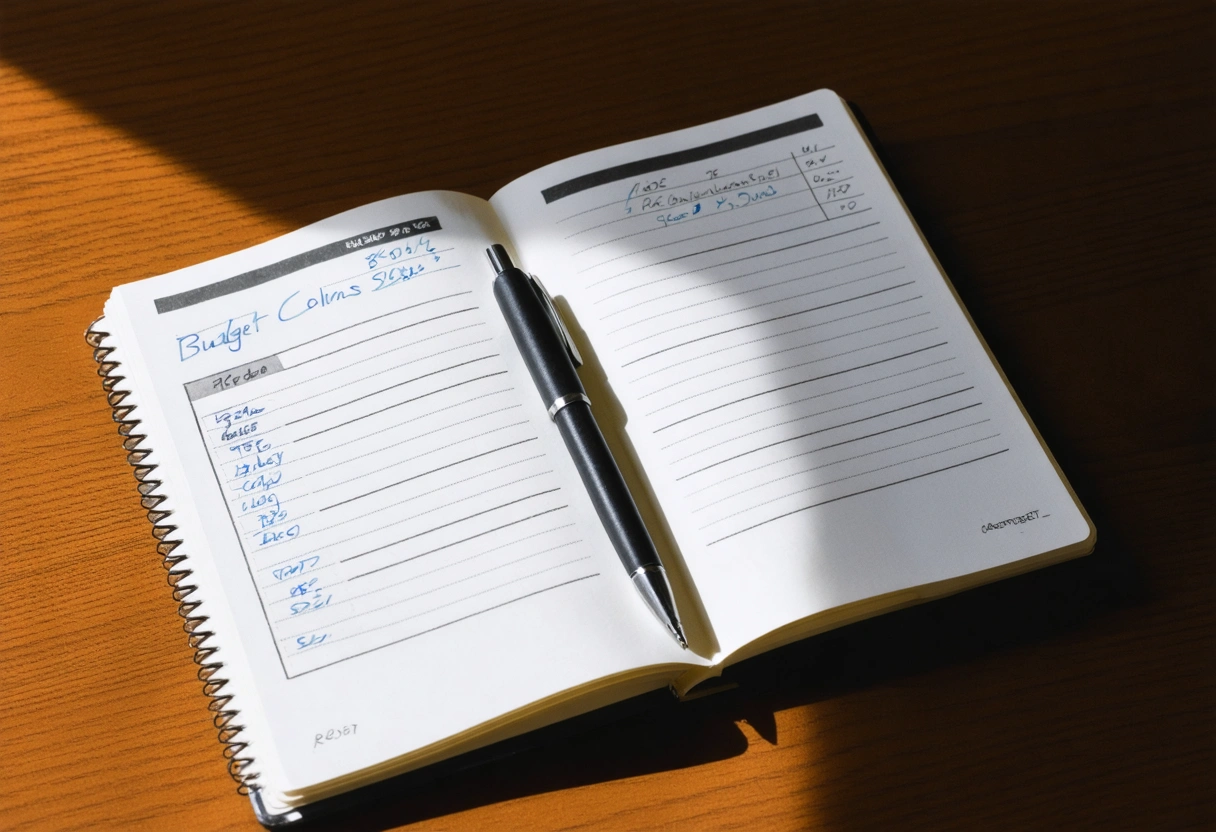
A household budget is not a mechanism for restricting spending. It is a mechanism for directing it — a tool for making deliberate choices rather than discovering after the fact where the money went.
Statistics Canada surveys consistently show that a significant proportion of Canadian households operate without a formal budget. The reasons given most often are that budgeting feels complicated, time-consuming, or demoralising — a constant reminder of what cannot be afforded rather than a useful guide to what can.
Those experiences are understandable. They tend to follow from approaches to budgeting that are not suited to how most households actually function. The goal here is not to defend budgeting as a moral virtue but to describe the approaches that work most reliably for ordinary Canadian households.
What a Budget Actually Needs to Do
A functional household budget needs to accomplish three things:
- Track where money comes from (income sources, amounts, and timing)
- Capture where money goes (spending by category, including irregular and annual expenses)
- Create a margin (the difference between income and spending, which allows for saving and unexpected costs)
Everything else is optional. The specific categories you use, the tool you use to track, the level of granularity — all of these are implementation details. The three functions above are the substance.
The Core Challenge: Irregular Expenses
The most reliable failure point in household budgeting is irregular expenses. These are costs that do not occur monthly but are entirely predictable over the course of a year: car registration, home insurance renewal, dentist visits, seasonal wardrobe purchases, annual subscriptions, holiday spending.
Most simple budgets account for monthly recurring costs — rent or mortgage, utilities, phone, groceries — and ignore everything else. When an irregular expense arrives, it disrupts the month's numbers and creates the feeling that budgeting is not working, when in fact the problem is that the budget was not comprehensive enough.
The solution is to convert annual irregular costs into monthly provisions. List all significant irregular expenses you expect over the next twelve months, total them, and divide by twelve. Set aside that monthly amount in a separate account or earmark it in your tracking. When the irregular expense arrives, it is already funded.
Three Approaches That Work
The percentage allocation method (50/30/20)
A rough-and-ready framework that divides after-tax income into three broad categories: approximately 50% for needs (housing, food, transportation, utilities), 30% for wants (dining out, entertainment, discretionary), and 20% for savings and debt repayment.
This model has the advantage of being simple and forgiving — it does not require tracking every purchase, just a rough awareness of whether spending in each category is roughly proportionate. It works well for people who find detailed category tracking unsustainable.
The zero-based budget
A method in which every dollar of monthly income is allocated to a specific purpose — spending categories, savings, or debt — until there is nothing left unallocated. The goal is not to spend everything but to make an explicit decision about every dollar rather than leaving any unaccounted for.
Zero-based budgeting is more time-intensive than percentage allocation but tends to produce sharper spending awareness and a clearer picture of where adjustments are possible.
The spending-first audit
For households that find it difficult to plan a budget from scratch, a useful starting point is a retrospective audit: pull three months of bank and credit card statements, categorise every transaction, and calculate actual average spending in each category. This gives a realistic baseline to work from rather than an aspirational plan that may bear little relationship to actual behaviour.
Tools Available to Canadian Households
Dedicated budgeting applications — some available free, others by subscription — provide transaction import, automatic categorisation, and visual spending summaries. Canadian bank accounts increasingly integrate with such tools through open banking-adjacent mechanisms.
Many Canadians use a simple spreadsheet, which has the advantage of being free, infinitely customisable, and requiring no data sharing with third parties.
The Financial Consumer Agency of Canada provides a free budget planner tool on its website that is straightforward and well-suited for people starting out.
The best budgeting system is the one you will actually use consistently. Perfect accuracy is less valuable than consistent awareness — and any system that requires significant effort to maintain will eventually be abandoned.
Buncomic covers personal finance, everyday life, and practical topics across Canada. Browse our full archive for more straightforward financial guides.